Subterranean termite treatment in Jacksonville requires a precise structural barrier rather than interior aerosol sprays. In high-humidity riverfront zones like Riverside, Avondale, and San Marco, ancient live oaks and…
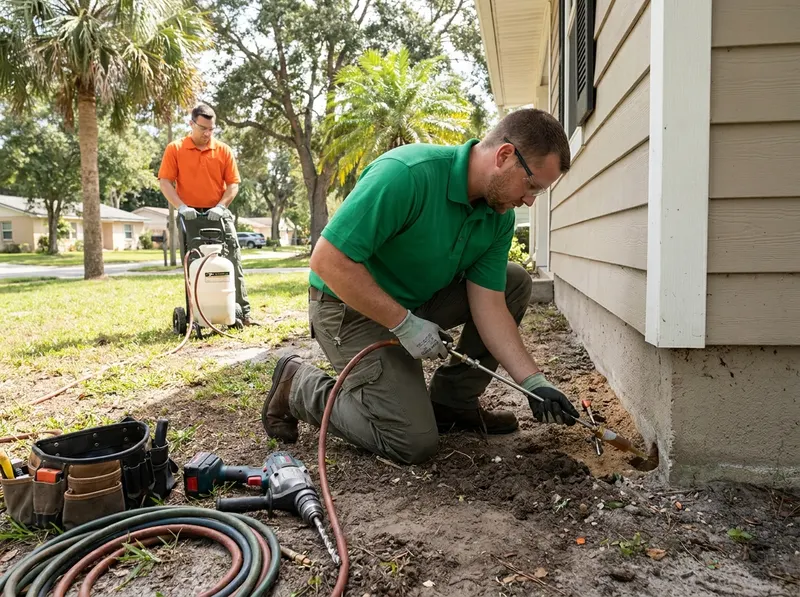
Subterranean termite treatment in Jacksonville requires a precise structural barrier rather than interior aerosol sprays. In high-humidity riverfront zones like Riverside, Avondale, and San Marco, ancient live oaks and low water tables create sustained colony pressure against crawlspace piers and stem walls. Invasive Formosan subterranean colonies consume up to 13 ounces of framing daily in warm weather, nesting deep beneath sandy coastal soil. Liquid non-repellent termiticides such as fipronil establish an undetectable transfer zone around concrete footings; workers pass through the treated zone, transport the active compound directly to subterranean chambers, and eliminate the queen within 60 to 90 days.
Slab foundations common to modern builds in Mandarin, Southside, and Oceanway present alternate subterranean entry avenues through interior plumbing penetrations and expansion joints. For monolithic slab constructions, technicians trench exterior soil to a depth of 6 inches and drill concrete surfaces every 12 inches to saturate subterranean soil zones underneath attached carports, walkways, and patios. This mechanical containment isolates the structure from ground moisture without drenching living spaces in baseboard chemicals. Crawlspace configurations near the St. Johns River and Ortega require additional pier wrap treatments and localized moisture barrier checks, preventing subterranean mud tubes from climbing hidden masonry lines undetected.
Selecting liquid chemical soil barriers over localized spot treatments represents a crucial protection trade-off. Spot treatments address isolated mud tubes at lower upfront expenditures but leave peripheral foundation margins vulnerable to alternative subterranean entries. Continuous liquid termiticide barriers demand thorough physical preparation along the entire drip line yet reliably deliver 5 to 10 years of unbroken subterranean exclusion. Property owners do not need to evacuate structures during exterior liquid treatments, as non-repellent solutions bind directly with organic soil particles beneath the surface layer and remain stable against heavy Florida rainfall.
Every job gets a firm, written price after a free on-site visit.
Tell us about your subterranean termite treatment job in Jacksonville and we'll send a clear, written quote, usually the same day.
 Moxelli Pest Specialists