Securing an authoritative pest control service in Jacksonville halts structural wood destruction and indoor biological contamination before property equity erodes. In Northeast Florida's subtropical climate, continuous humidity and mild winters allow subterranean termites, American cockroaches, and roof rats to breed across all four quarters without a natural freeze break.
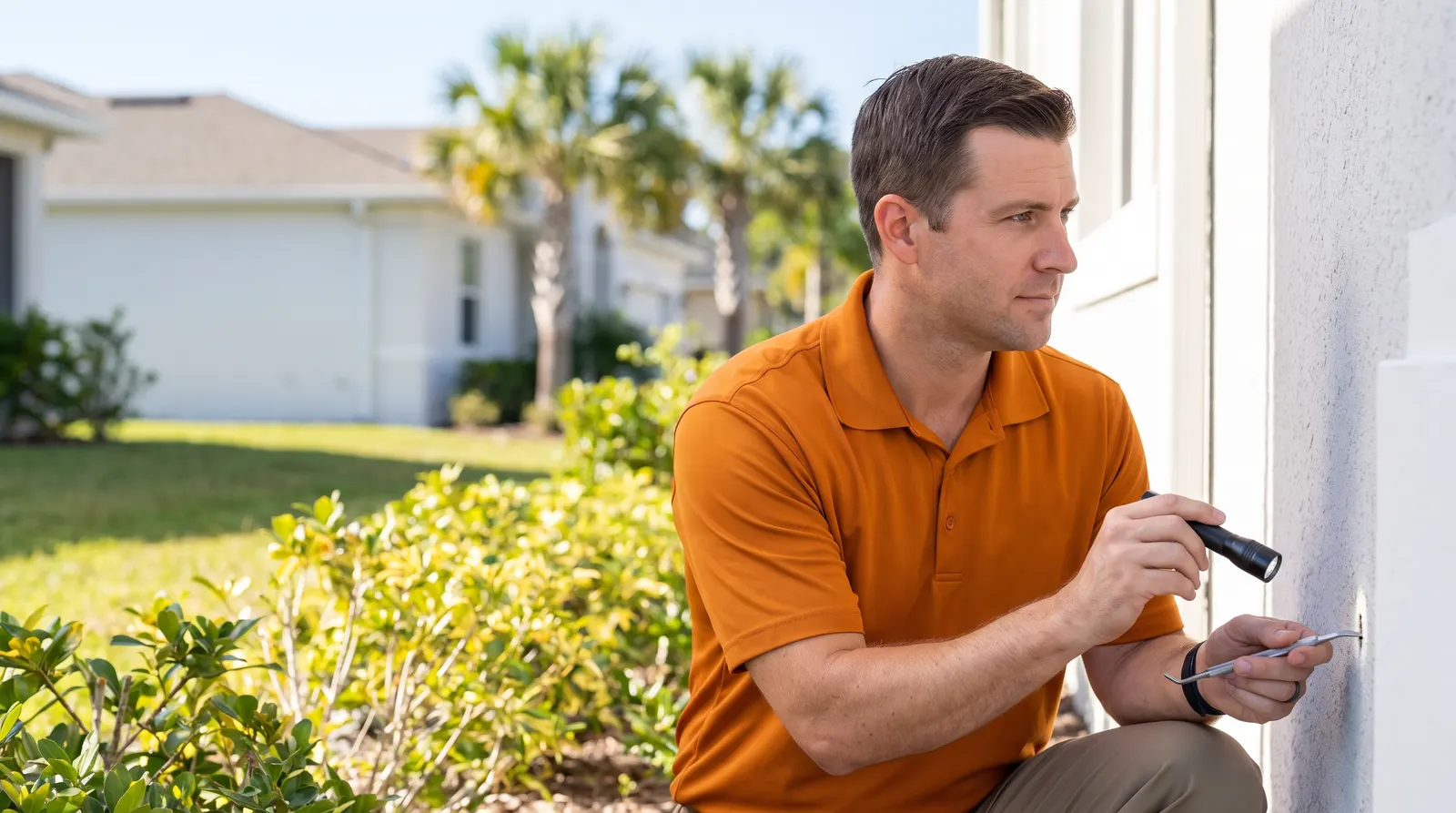
A professional pest control service in Jacksonville is a targeted biological management and structural exclusion process that halts active insect or vertebrate infestations and seals building perimeters across Duval County properties.
Every service reflects the same meticulous attention to detail, whether it's a single job or a larger pest control sevice project across Jacksonville.
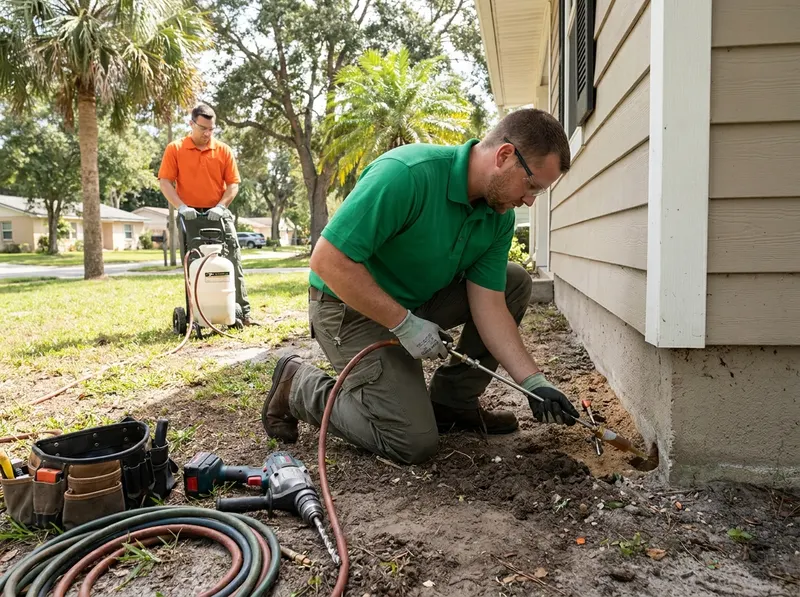
Subterranean termite defense establishes an unbroken chemical or bait barrier around continuous stem-wall and slab foundations across Duval County. Technicians trench soil along exterior foundation walls to a depth of 6 inches and a width of 6 inches, applying non-repellent liquid termiticides containing fipronil at a precise calibration rate of 4 gallons per 10 linear feet. Alternatively, technicians install hex-pattern monitored bait stations spaced every 10 to 15 linear feet around the roof dripline perimeter. Both approaches intercept eastern subterranean (Reticulitermes flavipes) and Formosan subterranean (Coptotermes formosanus) worker termites, utilizing social grooming behaviors to transfer active ingredients back to the reproductive queen. This halts the breakdown of sill plates, floor joists, and structural wall studs without drilling unnecessary indoor access holes through finished flooring.
Get a quote →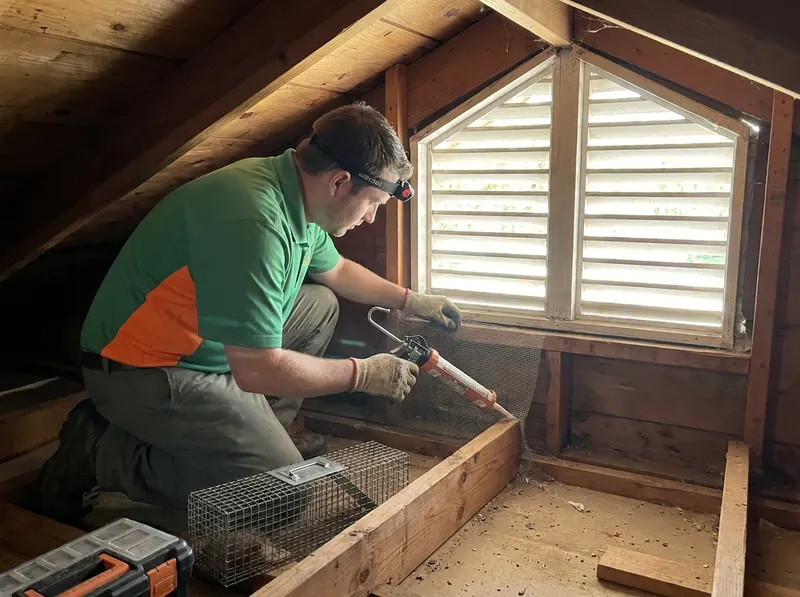
Roof rat (Rattus rattus) and house mouse (Mus musculus) eradication stops structural fire hazards, gnawed electrical conduits, and insulation contamination. Technicians perform an exhaustive forensic analysis of exterior rooflines, plumbing stacks, soffit vents, and fascia junctions. Every gap measuring greater than 1/4-inch is mechanically fortified with 18-gauge hot-dipped galvanized steel hardware cloth, high-temperature flashing, and copper wire mesh embedded in elastomeric expanding polyurethanes. Inside the attic, technicians establish high-density snap-trapping lines along identified biological runs, urine-marked framing members, and AC ductwork runs. Rodents are removed mechanically without introducing anticoagulant poisons into attic spaces, completely avoiding animal mortality and foul odor decomposition inside inaccessible interior drywall voids.
Get a quote →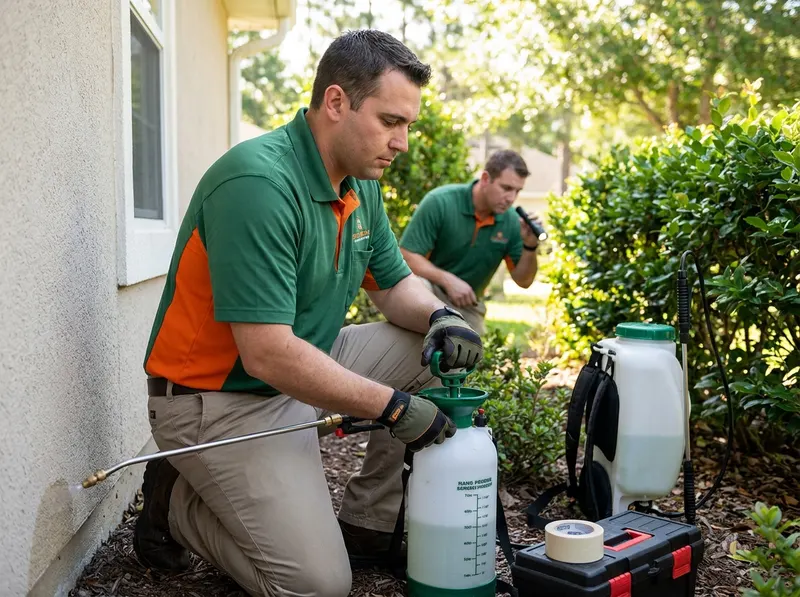
Intensive cockroach defense eliminates persistent German cockroach (Blattella germanica) indoor infestations and prevents peri-domestic American cockroach (Periplaneta americana) incursions. Technicians inject targeted indoxacarb and dinotefuran gel matrices directly into hidden hinge pockets, cabinet mortises, plumbing void penetrations, and electrical faceplate recesses. This treatment is paired with non-repellent insect growth regulators (IGRs) like hydroprene to break the reproductive egg-case (ootheca) cycle, rendering nymphs incapable of reaching sexual maturity. Concurrently, exterior perimeters are fortified using microencapsulated synthetic pyrethroids applied 3 feet upward on the masonry wall and 6 feet outward along the soil line, intercepting sewer roaches before they breach weep screeds, crawlspace doors, or window weather-stripping.
Get a quote →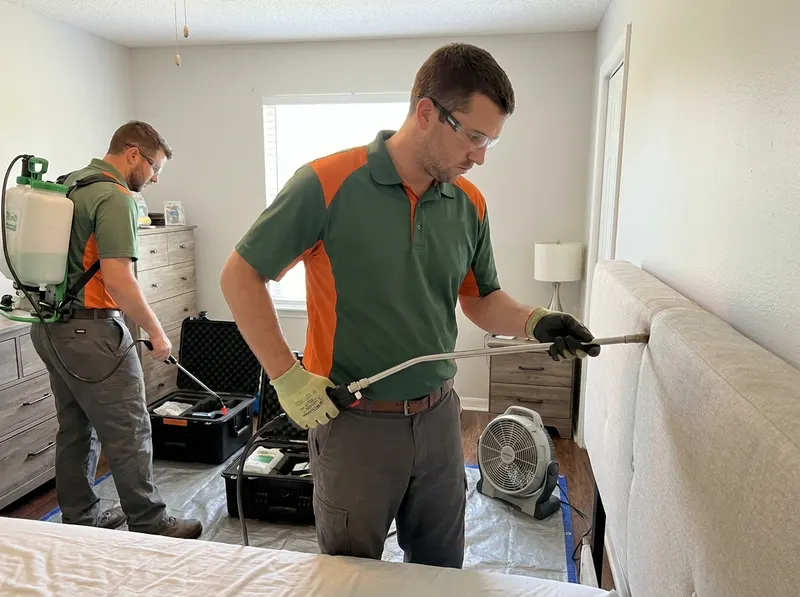
Targeted bed bug eradication eliminates Cimex lectularius populations from mattresses, box springs, headboards, baseboard perimeters, and electrical junction boxes. Depending on structural furniture density, technicians deploy targeted electric thermal heating systems that safely elevate ambient structural temperatures to a lethal threshold of 122 to 135 degrees Fahrenheit, sustaining this environment for a minimum of 4 hours to achieve complete mortality across adult insects, nymphs, and embryonic eggs. For structures requiring non-thermal interventions, precision residual chemical treatments integrate microencapsulated neonicotinoid-pyrethroid formulations with natural amorphous silica dust applied into baseboard crevices and drywall hollows. This multi-mode approach eliminates pesticide-resistant bed bug strains without requiring the premature disposal of expensive bedroom furnishings.
Get a quote →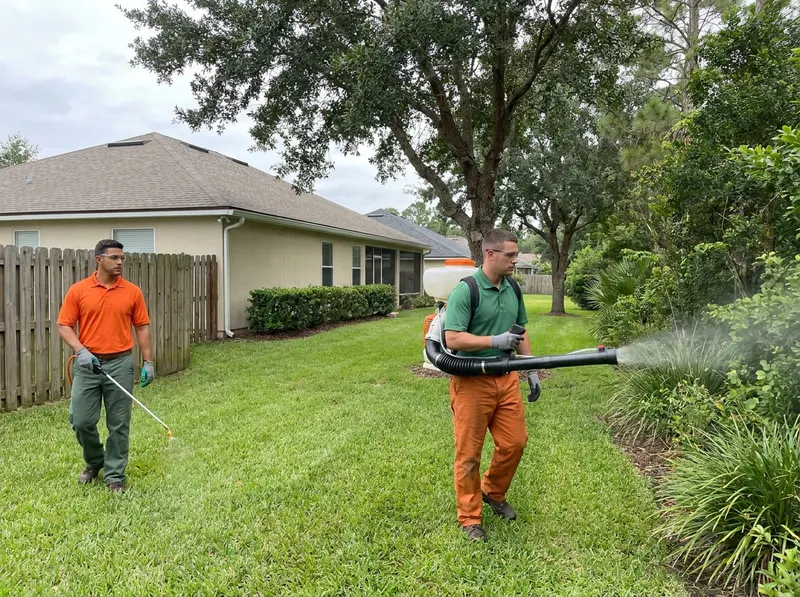
Exterior mosquito abatement dramatically curtails biting adult populations and halts larval progression across residential landscapes. Technicians use commercial backpack mist-blowers to distribute microencapsulated adulticide formulations directly to the underside of ornamental broadleaf foliage, shaded turf perimeters, dense foundation shrubs, and covered patio overhangs where mosquitoes harbor during midday heat. Simultaneously, standing water reservoirs, drainage swales, catch basins, and French drain discharge lines are treated with granular Bacillus thuringiensis israelensis (Bti), a targeted biological larvicide that destroys mosquito larvae without compromising domestic pets, native birds, or beneficial pollinator insects. Routine service cycles repeated every 21 to 30 days maintain complete barrier defense through the humid May-to-October breeding season.
Get a quote →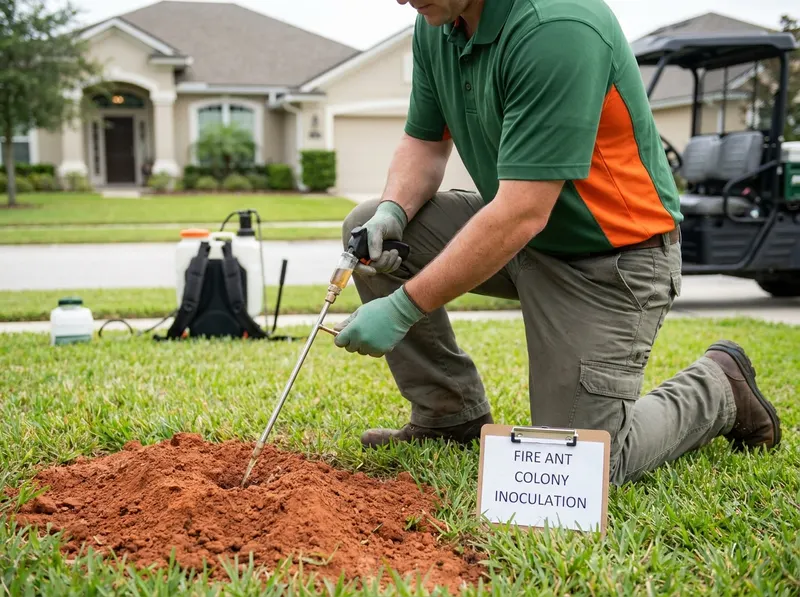
Imported red fire ant (Solenopsis invicta) eradication shields open lawn acreage, electrical transformer pads, HVAC condenser wiring, and children's outdoor play zones from aggressive biting colonies. Technicians dispense low-toxicity, lipid-formulated insect growth regulator baits across entire turf boundaries using calibrated broadcast spreaders, followed by direct low-pressure hydraulic injection of non-repellent liquid termiticides into primary active mounds. Foraging worker ants transport the active bait down into subterranean galleries to feed the reproductive queen and juvenile brood. This disrupts chitin synthesis and induces total colony collapse within 14 to 21 days, providing lasting landscape protection across residential acreage and commercial turf grounds.
Get a quote →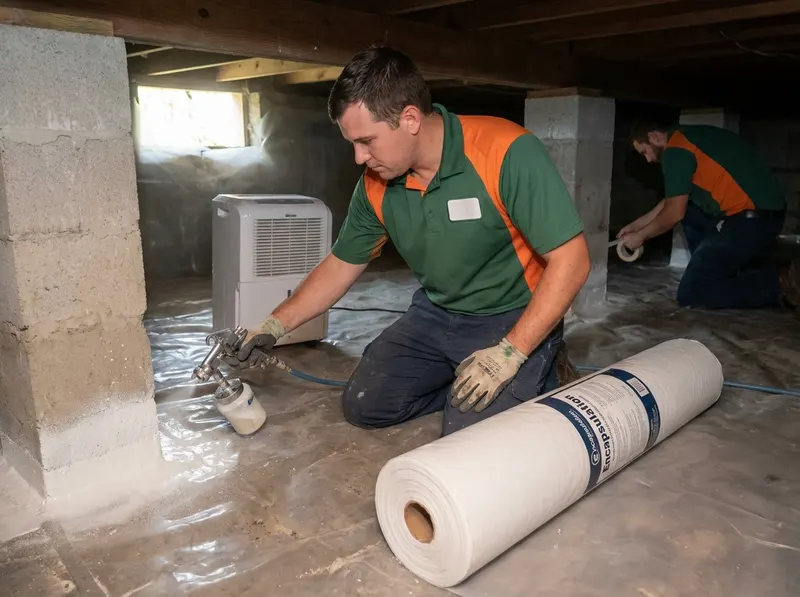
Pier-and-beam crawlspace intervention permanently eliminates wood-boring powderpost beetle infestations, dampwood termites, and moisture-driven insect harborages. Technicians coat all exposed structural framing, subflooring, and support sills with concentrated disodium octaborate tetrahydrate (DOT) wood preservatives, rendering structural lumber unpalatable to wood-destroying organisms. Technicians then level the crawlspace soil substrate and install a durable 20-mil tear-resistant multi-ply vapor barrier, overlapping seams by 12 inches and sealing all edges securely to interior masonry foundation walls with polyurethane adhesive. Crawlspace foundation vents are sealed with insulated composite boards, and commercial low-temperature crawlspace dehumidifiers are installed to stabilize structural wood moisture content permanently below 15 percent.
Get a quote →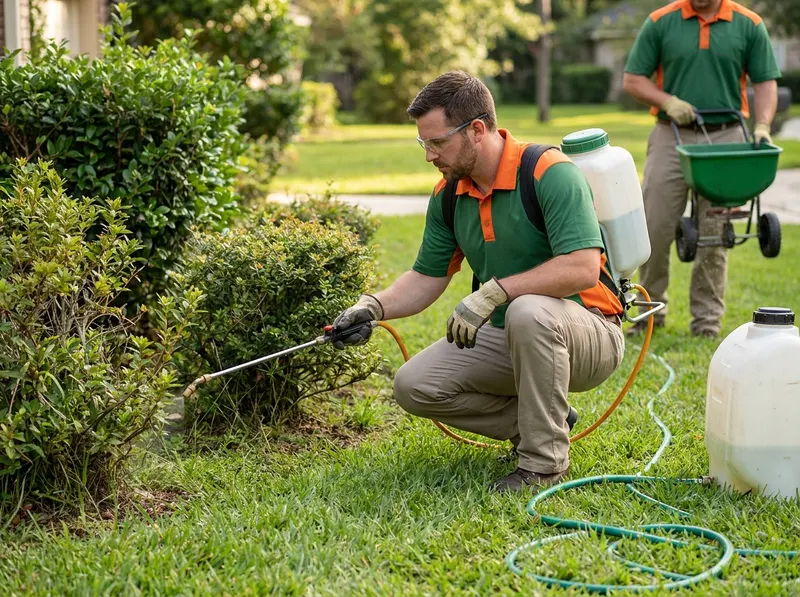
Comprehensive flea (Ctenocephalides felis) and tick (Rhipicephalus sanguineus) perimeter treatments neutralize biting external parasites nesting in turf grass, pine-straw bedding, and shaded perimeter shrub lines. Technicians apply targeted residual liquid acaricides paired with juvenile hormone mimics that penetrate dense turf thatch and leaf mulch. The treatment halts the development of flea larvae, sterilizes reproductive adults, and eliminates questing ticks along property perimeters and dog runs. These dual-action active compounds bind tightly to soil matter, creating an active insecticidal buffer that resists rapid breakdown from morning dew and lawn irrigation cycles while remaining non-hazardous to domestic pets once dry.
Get a quote →You get a firm, itemized quote for your pest control sevice before any work begins, no surprises, no pressure.
Careful prep, tidy work, and a full cleanup when we are done. We treat your home and belongings like our own.
The same trusted, background-checked team from the first call to the final check.
Property protection protocols must align with the specific biological threat facing the structure. If a structure exhibits mud tubes along foundation brickwork or discarded alate wings on interior windowsills between March and May, choose a liquid non-repellent termiticide barrier or a monitored bait system; the trade-off involves higher upfront capital investment and trench excavation around perimeter landscaping versus the severe risk of structural framing failure. If heavy scratching sounds occur inside attic drywall during evening hours between November and February, select full mechanical rodent exclusion and interior trapping rather than exterior bait boxes alone; the trade-off is the labor cost of sealing roof returns, soffits, and ridge vents with 1/4-inch steel hardware cloth versus persistent attic contamination and gnawed electrical wiring.
If peri-domestic cockroaches and Argentine ants are migrating through exterior weep screeds, deploy microencapsulated exterior perimeter barriers rather than interior aerosol sprays; the trade-off requires strict 60-to-90-day exterior reapplication cycles due to 50-plus inches of annual rainfall versus unnecessary chemical exposure inside residential living areas. If damp, moldy odors and buckled hardwood flooring occur over an unencapsulated pier-and-beam crawlspace, choose a 20-mil sealed crawlspace vapor barrier combined with structural borate wood timber treatment; the trade-off is a higher upfront renovation expense compared to surface insect sprays, but it permanently eliminates wood-boring powderpost beetle breeding conditions and subterranean fungal decay. When managing extensive exterior mosquito breeding along heavily vegetated waterfront properties near the St.
Johns River, implement automated microencapsulated botanical misting and larvicide briquette deployment rather than simple topical lawn treatments; the trade-off involves recurring monthly maintenance visits between April and October versus relentless vector-borne mosquito resurgence in standing water basins. If sudden German cockroach infestations appear inside kitchen cabinet hinges and behind dishwashers, deploy high-potency insect growth regulators and indoxacarb gel bait matrixes instead of non-specific fogging bombs; the trade-off is the requirement for meticulous interior cabinet sanitation and empty pantry shelves during inspection versus driving the breeding colony deeper into insulated appliance housings and wall cavities.
Every project gets a firm, written price after a free on-site visit. Ranges below for orientation.
Tell us about your pest control sevice job and we'll send a clear, written quote, usually the same day. Or just call and talk to a real Jacksonville pro.
(904) 920-3004
Jacksonville sits within a unique maritime and riverine basin where the expansive St. Johns River converges with coastal barrier lowlands, generating 50 to 55 inches of rainfall annually alongside prolonged 80-degree summer humidity. These hydrologic conditions create an environment where subterranean termites, wood-decay fungi, and structural moisture pests thrive throughout the year across Duval County. In historic architectural districts like Riverside, Avondale, and Springfield, early-20th-century residences built on heart pine piers and open masonry crawlspaces frequently suffer from elevated soil moisture and hidden subterranean termite mud tubes breaching pier perimeters. The shaded, mature maritime live oak canopies across Mandarin, Ortega, and San Marco provide natural overhead arboreal highways for roof rats (Rattus rattus), which navigate overhanging branches to enter attic ridge vents, architectural roof returns, and aging soffit screens. Further north in expanding subdivisions across Oceanway and east along the coastal corridors of Arlington, modern slab-on-grade foundations face constant perimeter invasion pressure from invasive tawny crazy ants, Argentine ants, and large American cockroaches. These pests travel along structural expansion joints, plumbing rough-ins, and weep screeds in response to shifting ground water tables. Standard over-the-counter surface sprays wash away under intense afternoon thunderstorm downpours along the I-95 and I-295 corridors, necessitating specialized microencapsulated foundation barriers and dedicated structural exclusion protocols designed specifically for Northeast Florida's low-elevation environment.
Free estimates for Jacksonville & the surrounding area.
 Moxelli Pest Specialists